You Make Demos but Really Dont Master the Art
You lot're finally making some decent tracks and starting to experience like sending those out to labels for release, or maybe but to play them out on your dj mixes or even shows. When y'all compare them to other comercial tracks though, you feel like yours are lacking some loudness and fall a bit behind . What to practise then?
There are a few options available.You could rent a mastering engineer to give the final treatment to your track. You could also attempt i of the online mastering options in the marketplace, nosotros reviewed 6 of them on the blog a few months agone.

Just if you call up almost it, spending money every time you want to effort a new rail or send a demo, knowing you might want to make some changes to it afterward, might not be the all-time idea.
Mastering is non an easy job, it requires a high level of expertise to brand decisions and it also requires that you have a properly treated room in terms of acoustics and then yous tin can make those skilful decisions. So when information technology comes to getting your last master, the one that will be released commercially, nosotros strongly recommend you to trust an experienced engineer for the job .
If yous still want to become deep into mastering and acquire your craft, that's great. We encourage y'all to start with the Masterclass nosotros shot with the amazing Robert Babicz , an outstanding engineer with decades of experience that will evidence y'all all the tricks and secrets behind analog mastering.
Still, if you desire to test your tracks out or send them to labels without spending too much money, at that place are a few steps you tin can take to achieve a quick, decent mastering on your ain with practiced plenty results for those purposes. And everything inside the box, without the need of external gear or expensive plugins.
Preparation before starting
Earlier diving deep into it, it'due south important to remember that for the mastering process to brand the best out of your music, the mixdown should be as good as you can make information technology . Whatever mixdown mistakes might be amplified past the mastering process, and the better your mix is, the easier it will be to get the mastering washed, so take expert care of that before jumping into this phase.
As well consider the level at which your mix is peaking. Somewhere between -6dB and -3dB should be fine, if you're also loud or also quiet, bring the level of your channels upward or down accordingly .
It would be squeamish to also use some reference tracks , so look for tracks that you know sound smashing and are similar to yours so they are helpful. You tin listen to them, make it the mood and compare them to yours to detect what are the differences betwixt them. This will help y'all to make decisions with a goal in mind.
Proceed in heed though, that these reference tracks are already mastered, so they are louder than yours, and so recoup by lowering the volume until you feel them at around the same perceived level .
Before getting into the technical stuff, detect the section of your track with the highest energy on it, and loop it. You should focus on that section while applying the following techniques.
Nosotros are going to exercise this in 3 simple steps, each i of them focusing on a different aspect of the mix: EQing for tonal remainder, reducing the dynamics and getting loudness.
1. EQing for tonal balance
The thought here is to make subtle adjustments in gild to remove any unwanted or unnecessary frequencies and improve the overall tonal rest of your mix .
What should you use hither? A surgical, versatile and clean EQ like Fabfilter'southward Pro-Q, Logic's Channel EQ or Ableton's EQ viii.
First, let'southward roll off a bit of the lowend. It might not be necessary depending on how you lot have been controlling the depression frequencies during the mixdown , but information technology'due south definitely worth checking it out. Start effectually 25 Hz and slowly go up. If you start noticing that the energy of your sub is falling apart, then back information technology down a little. Listen to your reference tracks to know when to stop.
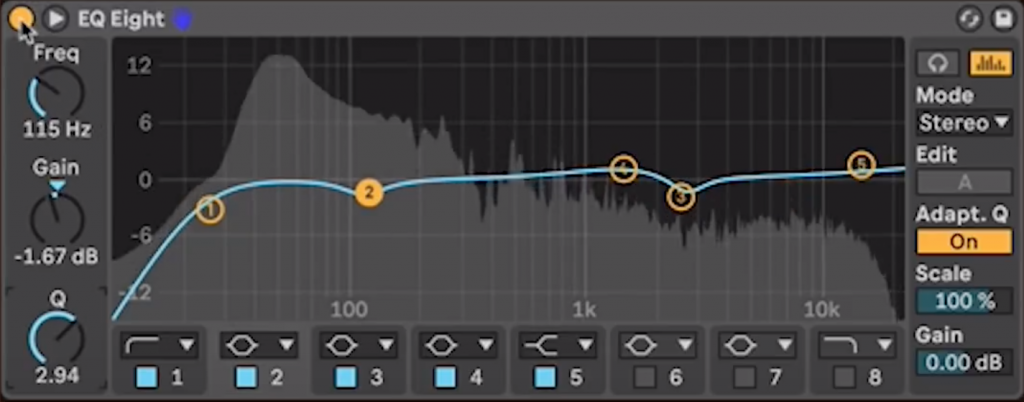
It's important that you lot don't overdo information technology, as this would pb to your rails existence too thin and lacking power . Merely information technology is also important to remove the unwanted frequencies on the sub, since those take a lot of energy and volition restrain you lot later on when you are budgeted loudness.
And then, look for any muddyness in the depression-mids or harshness in the high frequencies, and tame them with subtle EQ bells or dips. Usually no more than 2-three dBs should be needed, maybe fifty-fifty less than that if your mixdown was already sounding nice and clear. Proceed in mind we're doing little adjustments here, the most of import EQing should have been done during the mixdown stage .
Whenever you make cuts or dips, listen out for whatsoever loss of presence or buddy, on any elements, and if they happen, recoup with little EQ boosts on the necessary areas.
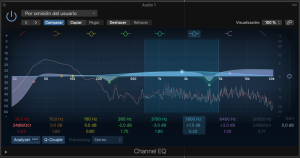
Finally, let's focus on the loftier-end frequencies, above x-12kHZ. You might desire to bring them upwards a bit with a shelving EQ if you experience like your hi hats and other bright elements demand to stand out a bit more when compared to the reference tracks.
For this kind of boosting, it might exist a good idea to use a coloring type of EQ, such equally Pultecs, Maag, APIs or any other plugin of this kind that you might take available. Whenever you have an overall tonal balance that is similar to the tracks you're referencing to, move on to the next step.
two. Reducing dynamics with compression and soft clipping
Compression can be a very deep and circuitous topic, particularly if we are talking about mastering. The arroyo we're taking here is pretty uncomplicated, just getting a tiny fleck of compression without messing upwardly the mix in society to mucilage our elements together and make them sound more cohesive . Later that, we volition apply some soft clipping to shave the biggest transients, thus reducing the dynamic range and assuasive us to get our primary to sound way louder on the last step .
The tool we are going to use for this step is an Ableton stock effect that allows us to do both compression and soft clipping: Glue Compressor. If you're not an Ableton Live user, yous can likewise go for Cytomic's The Mucilage, which is almost the same, although Logic's Compressor can as well get pretty like results with its Vintage VCA mode.
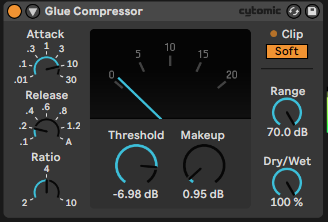
Permit's kickoff with the compression stage. Our goal should exist getting a proceeds reduction not bigger than i dB, something very subtle. Showtime, permit's drag the threshold down until we go a fairly noticeable compression, around half dozen-8 dB of reduction. This is only for getting the correct times for attack and release.
If we go the assault besides fast, the effect volition exist as well obvious, and the transients volition be smashed , something that we definitely desire to avoid. If nosotros get it slower, the transients will all go through, it will add together a scrap of character, simply if nosotros overdo information technology the event will be likewise obvious too.
Same goes for release times. Something very brusque will get things pumping just with an obvious event, while leaving a long release won't exist and then noticeable but the result can become a bit deadening .
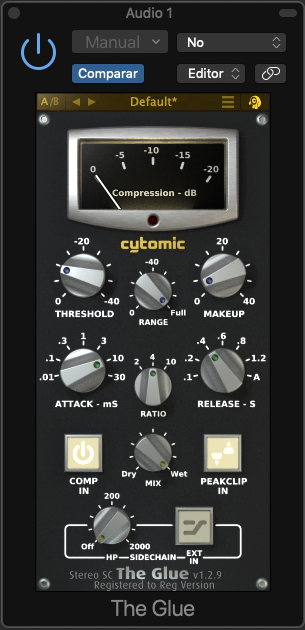
At that place'southward no exact right value for whatsoever of them, every bit information technology depends on a lot of things, and then heed advisedly and brand changes appropriately .
Considering all this, nosotros need to find the sweet spot, somewhere where it sounds natural enough, not also pumpy, not besides smashed . In one case you have gear up attack and release times, it is time to bring the threshold dorsum up, until nosotros become but a picayune scrap of compression, around one dB.
If y'all struggle with this, or yous're not sure of what yous are doing/hearing, it's better simply to skip this step and go straight for clipping than messing up the whole mix by doing it wrong.
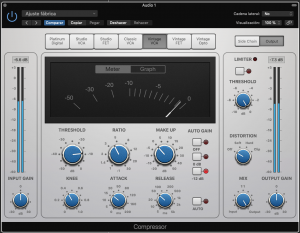
Subsequently the compression, we want to trigger that clipping, so we need to bring the Make up book up. Don't overdo it, just crank it up until you see the cherry-red light turning on a flake. And then simply printing the 'Soft Clip' button and you're skillful to get.
What we're doing with soft clipping is shaving the transients, thus reducing the dynamic range, which will allow us to go our master even louder on the next stage.
Since we cranked the book upwardly for the soft clipping to happen on the Mucilage Compressor, now we should bring it back down a bit, to a level shut to the 1 nosotros had before the glue compressor. You tin can do that with a utility or gain issue.
3. Getting things loud with limiting
For this final step, nosotros are going to employ limiting. You can utilize any limiter you lot take in your plugin drove, even stock plugins are good for the job, remember this is not going to exist a final master but a demo. On this stage, we merely want to get things every bit loud as we can without distorting or destroying the mix.
Load your limiter on your primary aqueduct, set the ceiling at -1dB. Then, start cranking up the gain. The tricky part here is when to stop. If you're hearing distortion conspicuously, or if you feel like your track is sounding chaotic or unnatural, then you certainly are bringing it upward too much.
Getting a 4 or v dB reduction here would be nice, but that volition depend on how good of a job you did with your mixdown. In that location are some techniques combining two limiters with different settings that will permit you to get a lot of loudness, but we want to proceed things simple in this post so everyone can have a try.
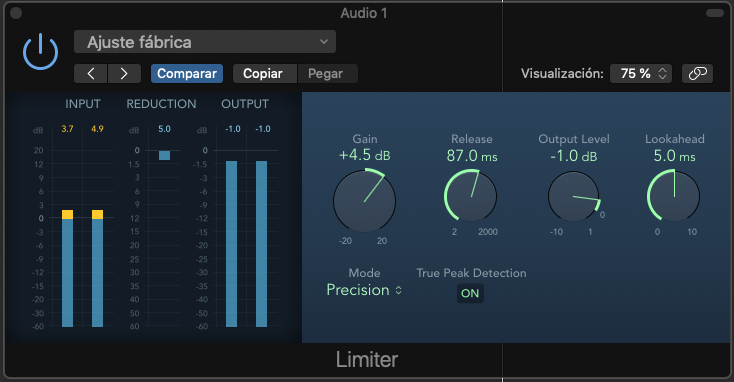
Once you lot observe a point where it doesn't audio too harsh or distorted, that'southward information technology. You lot might think of comparing your loudness to the reference tracks, but that wouldn't exist a wise thing to practice, since those tracks take probably been mastered by professional person engineers, so you probably won't be able to get your demo main to the same level of LUFs or RMS.
This is it. If you're feeling like this is non working for you, maybe you lot need to revisit your mix, or maybe your ears aren't still trained enough for this kind of task. Developing an power to listen and hear these subtle and precise changes needs lots of hours of practise and listening sessions in properly treated environments – or a great prepare of headphones.
Equally we said before, this is only a demo, not a commercial, professional mastering process, and the final result will depend on the quality of your mixdown, the acoustics of your room and of course your experience, so don't give up and go along working!
Source: https://www.aulart.com/blog/how-to-make-a-quick-master-for-your-demos/
0 Response to "You Make Demos but Really Dont Master the Art"
Postar um comentário